Plexi
Every act of care, accounted for
Senior Product Designer
·
Founding team
·
2018–23
Veterinary practices ran inpatient care across whiteboards, paper notes, kennel clipboards, and word of mouth. As part of the founding team, we built a real-time clinical workflow layer alongside the practice management system — capturing care as it happened and ensuring what was delivered could be charged for. The product was built for practices of different sizes, from independents to corporate groups representing over 1,000 practices.
Product Design
Design Systems
UX Research
Interaction Design

Understanding the care given to a patient meant assembling information from wherever it happened to be recorded. Five sources. No single picture.

Understanding the care given to a patient meant assembling information from wherever it happened to be recorded. Five sources. No single picture.

Clinical work couldn't be designed on assumption. Domain knowledge came from the founding vet and ex-nurse CX staff. Demos, pilots, and industry events kept surfacing what the product hadn't yet accounted for. Practices were visited to observe workflows directly.

Clinical work couldn't be designed on assumption. Domain knowledge came from the founding vet and ex-nurse CX staff. Demos, pilots, and industry events kept surfacing what the product hadn't yet accounted for. Practices were visited to observe workflows directly.

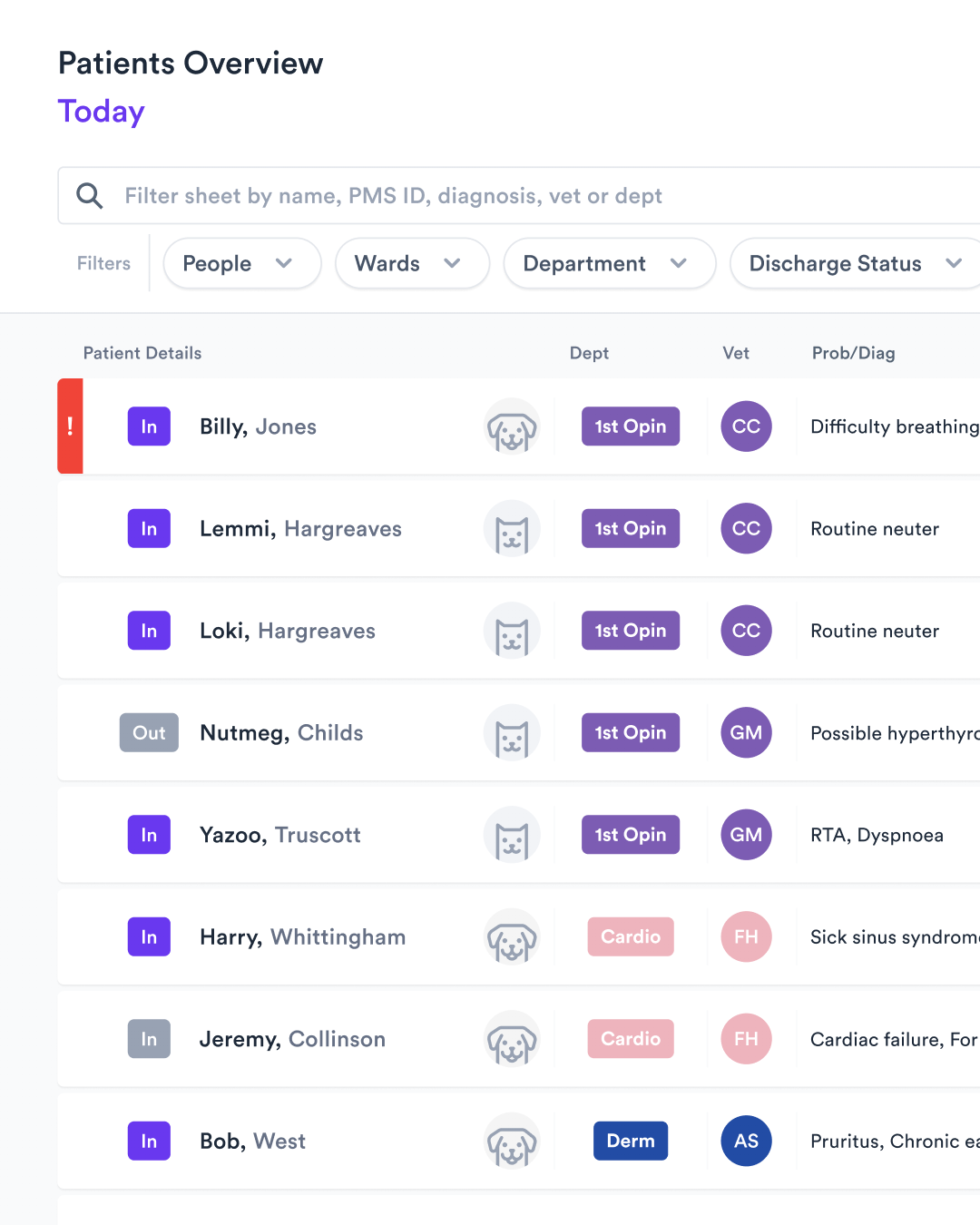
Each admission appeared here first. A shift could begin with a full ward — patients at different stages, different care requirements, different teams responsible. Every act of care had to be captured.

Each admission appeared here first. A shift could begin with a full ward — patients at different stages, different care requirements, different teams responsible. Every act of care had to be captured.

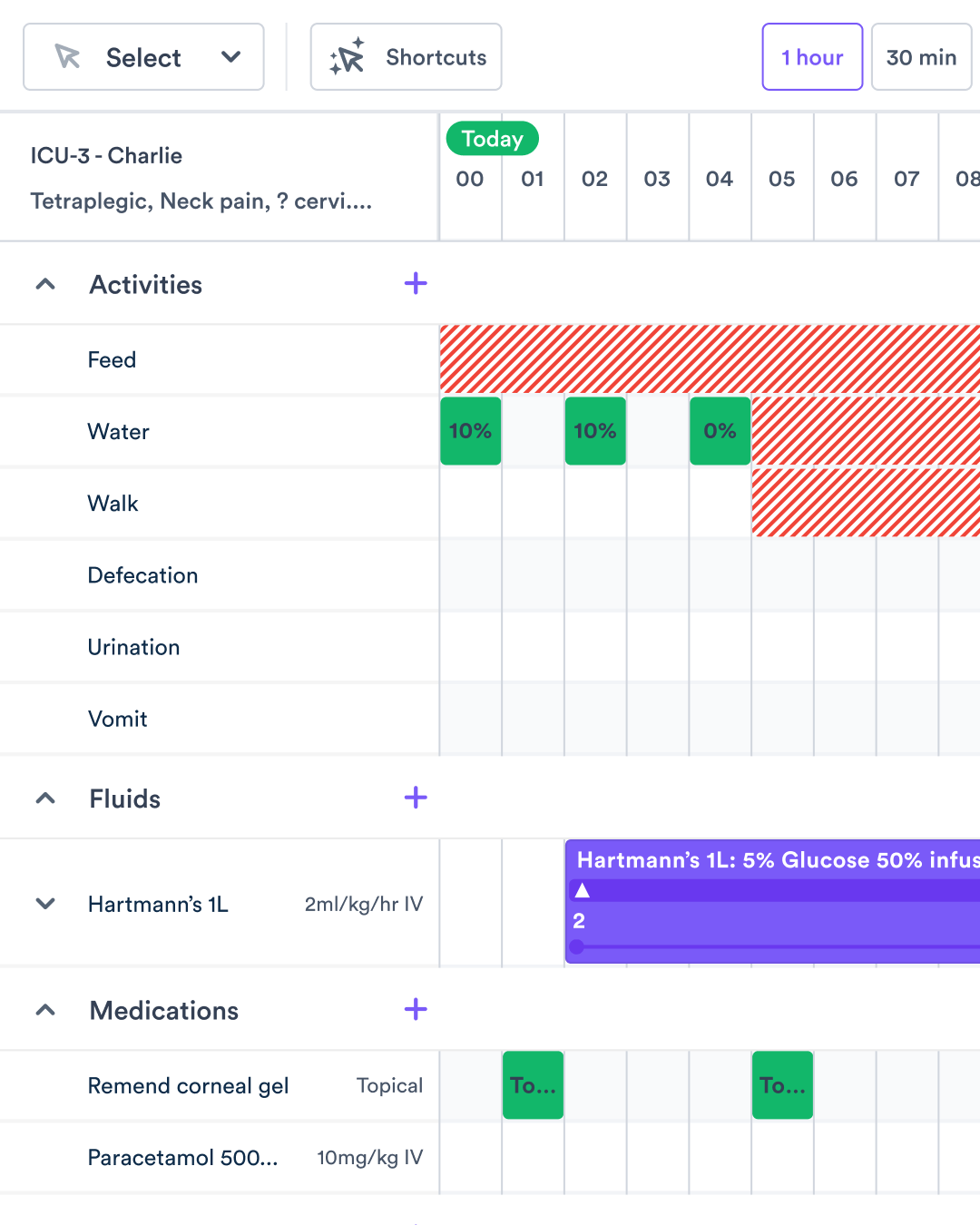
The ward sheet was the primary surface, where nurses spent most of a shift. It planned and recorded each patient's care on a 24-hour timeline.

The ward sheet was the primary surface, where nurses spent most of a shift. It planned and recorded each patient's care on a 24-hour timeline.

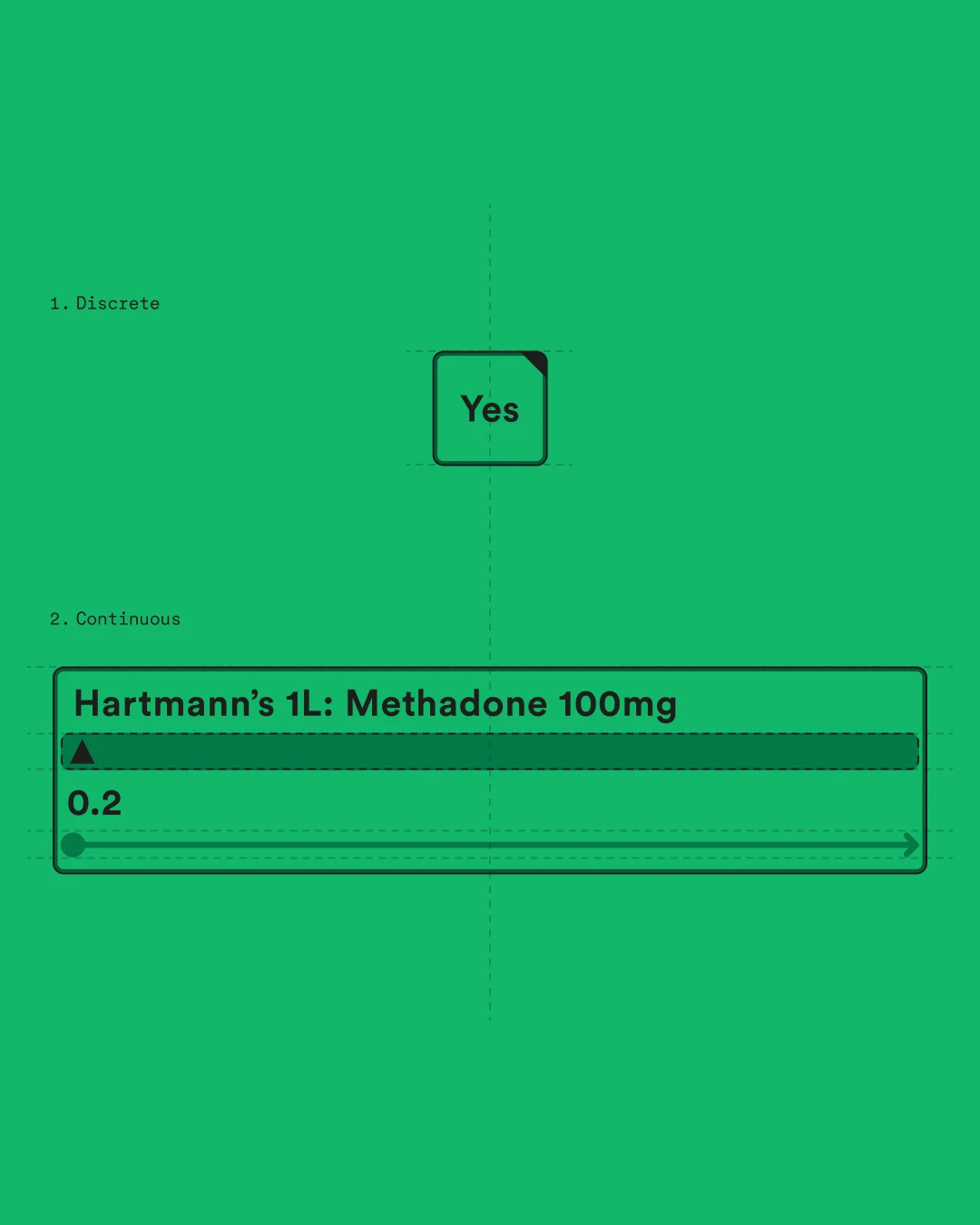
Tasks were recorded as chart boxes on a row. A feed check needed a yes or no. A fluid bag needed a rate, a volume, and a record of additives.

Tasks were recorded as chart boxes on a row. A feed check needed a yes or no. A fluid bag needed a rate, a volume, and a record of additives.

Paper accepted any writing in any box but failed at continuity, legibility, and audit. The same timeline held every type of care, persistent across shifts and legible to whoever picked it up next. The audit trail preserved what was done as it was done — for clinical review, insurance, and regulatory inspection.

Paper accepted any writing in any box but failed at continuity, legibility, and audit. The same timeline held every type of care, persistent across shifts and legible to whoever picked it up next. The audit trail preserved what was done as it was done — for clinical review, insurance, and regulatory inspection.

Plexi recorded every action, timestamped and complete. But practices didn't bill that way. Translation from clinical actions to billable charges was still manual, still happened after a clinical shift, still varied by practice. Capturing missed charges could add 10–20% to practice revenue.

Plexi recorded every action, timestamped and complete. But practices didn't bill that way. Translation from clinical actions to billable charges was still manual, still happened after a clinical shift, still varied by practice. Capturing missed charges could add 10–20% to practice revenue.

We chose to define the charge as a template, not reconstruct it afterwards. Items sat under a parent charge, each carrying its own pricing rule. A completed charge moved into the PMS as a single entry.

We chose to define the charge as a template, not reconstruct it afterwards. Items sat under a parent charge, each carrying its own pricing rule. A completed charge moved into the PMS as a single entry.
Credits
Assets courtesy of Plexi